Food Systems Action Plan for Dane County

Around the world, communities are gathering to develop action plans for their food systems. Food policy councils, like ours in Dane County, develop action plans to guide community leaders and elected officials in decision-making for equitable, just food systems. A huge community effort, supported with a federal grant, just announced the completion of Dane County’s first Food Systems Action Plan. Learn more about Dane County’s food systems and actions we can take at https://dane.extension.wisc.edu/dcfsap/.

The report details seven goals and summarizes strategies to attain them:

  • collaboration
  • production
  • access
  • infrastructure
  • efficiency
  • resilience
  • prosperity

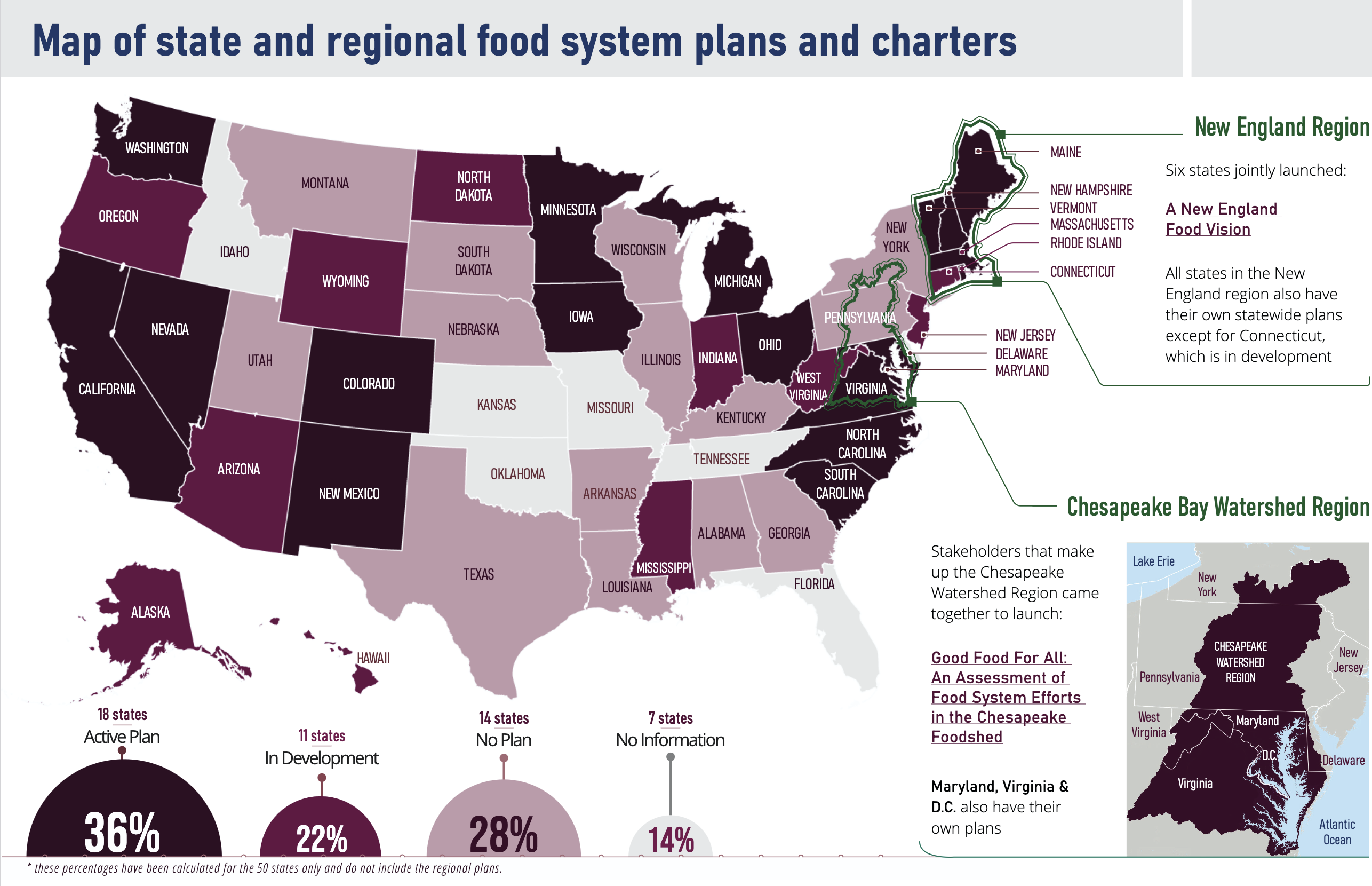
Although this is the only known example of a contemporary food systems plan in Wisconsin, an early attempt was made in 1982 through Rodale’s Cornucopia Project. Today, nearly 60% of U.S. states (about 30 states) have an active, comprehensive food system plan or charter. Two multi-state regions collaborated to develop regional food systems plans. Dane County now joins the ranks of one of over 300 local, county, and tribal Food Policy Councils that are enacting community-specific plans across the country. For more about the food systems action plan movement in the US, see “Participatory state and regional food system plans and charters in the U.S.: A summary of trends and national directory” released in 2021.

State and regional food system plans and charters 2021

Terminal markets in the US

A team of Cornell economists recently published a report detailing terminal market activity in the US. The report “Wholesale Produce Markets: An On-Site Infrastructure Assessment” is available at https://business.cornell.edu/wp-content/uploads/2026/07/Wholesale_Produce_Markets_Infrastructure_FINAL__VD_.pdf

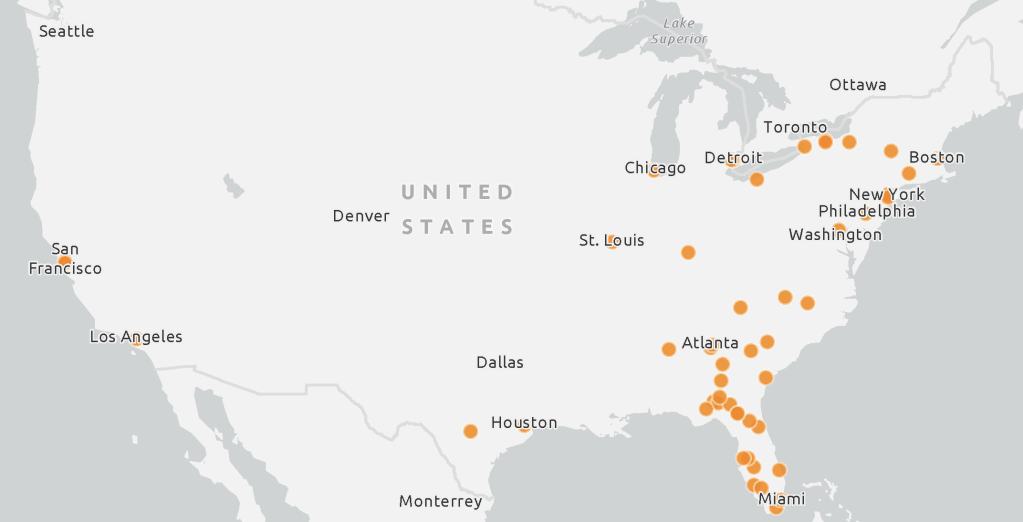
Researchers estimate that the forty-eight remaining terminal produce markets in the US move 47% of the produce in those metropolitan areas. Most US terminal produce markets serve the Southeast and Eastern seaboards. 28 markets in the South and Southeast are operated by the state departments of agriculture. Only five cities in the Midwest currently host terminal markets: St. Louis, Chicago, Detroit, Louisville, and Cleveland. US terminal markets sometimes also host open retail markets or support farmer wholesale activity, as they do in Ontario. Chicago’s market serves wholesalers only.

Wholesale produce markets that still in operation face critical infrastructure deterioration and obsolescence that hinder modern product flow, food safety compliance, and operational efficiency. 60% of market managers desire major structural expansions or renovations despite a lack of public or private capital investment.

Core Infrastructure Challenges

  • Deteriorating Facilities: Aging physical buildings feature original designs unsuited for modern logistics, cold-chain preservation, and timely produce handling.
  • Regulatory Hurdles: Inadequate configurations restrict compliance with contemporary food safety mandates, limiting market access to primary mainstream buyers like major grocery chains.
  • Capital Deficits: Rising construction and renovation costs leave most terminal facilities struggling to self-fund essential physical upgrades.

Improvement Priorities

  • Dock Upgrades: 60% of surveyed managers prioritize loading dock enhancements, including added space, leveling systems, and temperature-controlled environments.
  • Structural Repairs: 50% target core building components such as deteriorating roofs, worn flooring systems, exterior walls, and industrial doors.
  • Operational Themes: Investments center around six main pillars: workflow efficiency, food safety compliance, product quality preservation, spatial growth, functional utilities, and centralized business services.

Canada invests in 2 more terminal markets

Canada is investing $1 billion to build 2 more food terminals by 2028, aiming to strengthen the food system & stabilize prices. Canada has one terminal now, the Ontario Food Terminal at Toronto. Twenty-one produce wholesalers and 400 farmers sell wholesale at the market. The Terminal supports local farmers, local fruit and vegetable stores, independent and chain supermarkets, retailers, restauranteurs, foodservice, caterers, farmers’ markets, farm gate markets, florists, garden centres, landscapers, convenience stores and institutions. Buyers are from as far away as Manitoba and the Atlantic provinces.

Invite: WFHC introduces the Super Transport Coop

Thursday, April 30, 5-9pm, 2026 @the Eight10, 810 Churchill Street, Waupaca WI

This event formally introduces the STC vision, its intended impact and opportunities for collaboration as WFHC works toward a more resilient and equitable food system in Wisconsin.

The evening will feature thoughtfully prepared cuisine catered by J’s BBQ, highlighting locally sourced ingredients, along with stories and perspectives from small and local producers across the state. The Orphans, the famous MKE cover band, will enliven the evening.

Tickets start at $25. To RSVP, go to https://www.eventbrite.com/e/introducing-the-stc-super-transport-cooperative-created-by-wfhc-tickets-1983733720960?aff=oddtdtcreator

support our food hub!

The closing of the USDA Local Food Purchasing Program has been devastating for hundreds of farm and food businesses across the state. One critical infrastructure partner affected is the Wisconsin Food Hub Coop. Our food hub moves local foods to market and is partnering with smaller warehouses to create the Super Transport Coop.

To replace the LFPA market, the WFHC is initiating a statewide food box program. You can order boxes to be delivered to sites across Wisconsin for pick up, starting late summer.

Now, you can purchase a t-shirt to support the effort. Every t-shirt you purchase helps feed families in need, uplift local farmers, and strengthen the roots of Wisconsin communities. It’s more than just a shirt— it’s a statement of support and a step toward a stronger, more resilient food system.

INVITE: Collaborating for regional food systems

Join us Thursday, February 20, 9:30-noon in LaCrosse. The event will bring together businesses working on distribution and logistics for local and regional foods.

UW-Extension will host the event at their office, 212 6th Street North, Suite 2200, La Crosse. Several organizations are co-hosting the event in advance of the 2025 Marbleseed Organic Farming Conference.

RSVP appreciated but not required: email mmmille6ATwisc.edu

Starting at 10am, we will hear lightening talks from:

  • Wisconsin Food Hub Cooperative on distribution
  • Wisconsin Food Systems on data management
  • UW Center for Integrated Agricultural Systems on collaborative logistics
  • DATCP on Resilient Food Systems Infrastructure grants
  • Great Lakes Midwest Food Business Center on progress
  • Great Lakes Common Market on the Chicago scene
  • Great Lakes Intertribal Food Coalition on collaboration

We will pass a hot mic around for YOU to share your projects and your interest in collaboration, too.

Watch this space for more information and updates.

Co-hosts include Wisconsin Food Hub Cooperative, Wisconsin Food Systems, UW-LaCrosse Extension, UW-Madison Division of Extension Community Food Systems, and UW-CIAS. If you are interested in co-hosting, contact us at WFS.

Confirmed Participants as of 2/19/2025

  1. Josh Bryson, The Good Acre
  2. Stephanie Spehar, University of Wisconsin – Oshkosh
  3. Andrea Noll, University of Wisconsin
  4. Alpa Goswami , Marbleseed
  5. Marcus Grignon, Food Systems Development, Department of Agriculture and Food Systems, Menominee Nation
  6. Maisah Kahn, Regenerative Agriculture Association
  7. Sara Ecker, Ecker’s Apples
  8. Kara Black, Feeding America Eastern Wisconsin
  9. Stephanie Dodge, Intertribal Food Systems Coordinator, Menominee Tribal Department of Agriculture and Food Systems
  10. Hinu Smith, Director, Department of Agriculture, Ho Chunk Nation
  11. Gary Besaw, Director, Department of Agriculture and Food Systems, Menominee Nation
  12. Will Hughes, consultant
  13. Marlie Wilson, USDA-AMS, RFSI program
  14. Jennifer Falck, Food Business Development Coordinator, Department of Agriculture and Food Systems, Menominee Nation
  15. Keitra Olson, WEDC
  16. Danielle Endvick, Wisconsin Farmers Union
  17. Rue Genger, UW Horticulture
  18. James Pyecroft, UWEX Community Food Systems
  19. Sara Tedeschi, Crawford County Extension
  20. Bradley Bolling, NSF Engines project, UW-Madison
  21. Bernard Lager III, Arise Nutrition
  22. Jan Joannides, Renewing the Countryside
  23. Andrew Adamski, Full Circle Farm
  24. Josh Engle, Driftless Organics
  25. Tyler Dvorak, Fifth Season
  26. Sarah Larson, Great Lakes Midwest Food Business Center
  27. Rufus Haucke, Keewaydin Farms
  28. Halee, Meadowlark Mill
  29. Phil Jahnke Sauer, Iowa RC&D
  30. Teresa Wiemerslage, Iowa Extension
  31. Beth Heller, WELLO
  32. Juli McGuire, Blue Roof Orchard
  33. Sheri Scott, Driftless Berry Growers
  34. Karin, Driftless Berry Growers
  35. Alondra Cano, Hungry Turtle Farm
  36. Ann Vang, Central Rivers Farmshed
  37. Kattia Jimenez, Pura Vida Organic Farm, LLC
  38. Christy McKenzie, Pastures and Plenty
  39. Joleen Baker, Coop Partners Warehouse
  40. Kat Becker, Cattail Organics
  41. Tracy Vinz, Olden Produce
  42. Tara Roberts-Turner, Wisconsin Food Hub Cooperative
  43. Eliana Pinella, Common Market Great Lakes
  44. Peter Krause, Iowa Food Hub
  45. Bob Wills, Cedar Grove Cheese
  46. Noah Bloedorn, REAP
  47. Aidan Coffin Ness, REAP
  48. Rose Santa Gonsáles, NSF ICICLE
  49. Grace Puc, DATCP RFSI
  50. Allison Lindsey, DATCP Farm-to-School
  51. April Yancer, Farm to School and Institution Program Specialist
  52. Katie Kratch, DATCP Local Food Purchasing Assistance
  53. Sarah Lloyd, Wisconsin Food Hub Cooperative
  54. Rebecca Kemble, Wisconsin Food Systems, Inc.
  55. Cathryn Herlihey, UWEX-Community Food Systems
  56. Lindsey Day Farnsworth, UWEX-Community Food Systems
  57. Regina Hirsch, UW-CIAS
  58. Michelle Miller, UW-CIAS

Bobby Golden: Pioneer of Madison’s Food Movement

Restaurant owners in the Madison area know R.E. Golden Produce for its exceptional service and local foods selection. The company has outgrown it’s space and moved to Madison’s south side, on Fish Hatchery Road.

Its founder, R.E. (aka “Bobby”) Golden, was a key builder of Madison’s local food movement back in the early days. Watch this short film to understand the work needed to create our food co-ops. It also shows the role that R.E. Golden played in that effort.

Transforming Food Systems: Key Political Challenges

“While the need for a transformed food system that is healthier and more resilient is rarely disputed, the politics of adopting and implementing necessary policies to achieve these goals is highly contentious.” – Danielle Resnick, International Food Policy Research Institute

Come hear Resnick speak on Wednesday, October 30th at 7pm on this topic and hear responses to remarks from food system practitioners.

Dr. Danielle Resnick, political economist, will highlight key constraints at the local, national, and global scales that require priority attention for food systems transformation. She writes:

“While the need for a transformed food system that is healthier and more resilient is rarely disputed, the politics of adopting and implementing necessary policies to achieve these goals is highly contentious. Policy reforms typically involve addressing trade-offs across interest groups, reconciling opposing cultural and ideological beliefs, and navigating the distribution of power within extant institutions. This lecture will highlight key political economy constraints at the local, national, and global scales that require priority attention for the uptake of improved policies for food system transformation. In addition, it will consider the viability of possible solutions to overcome these constraints, including better sequencing and framing of policy options, forging coalitions and expanding networks, and transparency mechanisms that keep relevant stakeholders accountable for food systems performance over time.”

Dr. Resnick is a Senior Fellow at the International Food Policy Research Institute and a Non-Resident Fellow at the Brookings Institution. Her key research areas include the political economy of agricultural policy and food systems, decentralization, urban governance, informality, and democratization.

Her remarks will be followed by community responses from organic farmer Rick Adamski, Seymor, WI, and supply chain developer Sarah Lloyd, Wisconsin Dells. Dr. Nan Enstad, Department of Community and Environmental Sociology is moderating the event.

Resnick edited a book on the topic last year that is free to download: https://library.oapen.org/ handle/20.500.12657/85666. She also co-authored a report on urban agriculture released in July that includes recommendations on how to improve the urban-rural interface at:https://www.fao.org/cfs/cfs-hlpe/publications/hlpe-19

This event celebrates the 35th anniversary of the Center for Integrated Agricultural Systems, founded by Wisconsin farmers, environmentalists, faculty, staff and students.

Co-Sponsors: Weston Roundtable, Union Directorate Distinguished Lecture Series, CALS Global, Center for Sustainability and the Global Environment, Extension Community Food Systems, Departments of Community and Environmental Sociology, Agricultural Economics, Political Science, and the Bradshaw-Knight Foundation.

The Political Economy of Food Systems Transformation. Dr. Danielle Resnick, International Food Policy Research Institute and Brookings Institution. Community responses from Rick Adamski and Sarah Lloyd

Wednesday, October 30th, 7pm, Wisconsin Historical Society auditorium, Free and open to the public. Livestream link and recording at cias.wisc.edu
Resilient Food Infrastructure

For those of us working on building our regional food infrastructure, it has been a busy couple of months. Up to March 6, we were writing, emailing, and zooming to develop successful proposals to DATCP to rebuild our food systems. The Resilient Food Systems Infrastructure (RFSI) program is a one time USDA Agricultural Marketing Service effort to provide states with capital to make our food systems more resilient. Of all the states, Wisconsin received the second largest federal investment: $27million. Only California had a larger program.

Wisconsin Food Systems submitted a proposal to build the information platform our small and medium sized businesses need to improve B2B transactions. We also wrote letters of support for several other proposals to demonstrate that we are in this together. One of those proposals supported the expansion of RE Golden’s warehouse in Madison. Bobby Golden was a founder of the local wholesale food movement, bringing truckloads of food to ICC and Mifflin St. Coop in the early 70s. His company, now owned by his son and partners, continues the tradition, serving Madison area restaurants with local foods. Other proposals supported the Wisconsin Food Hub Cooperative’s efforts to move Wisconsin produce throughout the state, with a special commitment to serving the underserved. Our Tribal partners submitted several proposals to restore Tribal trade routes for foods native to Wisconsin such as manoomin, maple syrup, and white corn.

Proposals were due March 6 and the word is that 255 proposals were submitted, totaling $158 million in requests. We expect funded projects will be announced this summer. Perhaps state government and private investors might step in to further meet this demonstrated need? We know that not all the projects requested will be funded through this program so making sure that our work is inclusive and strategic is more important than ever. We will continue to build alliances and work together to realize the food systems we envision.

(Rumor has it that this program was inspired by the Madison Terminal Market report. How cool is that?)

Food Rescue Convening

On October 11, Chris Brockel from FEED Kitchen and Rebecca Kemble from Wisconsin Food Systems convened key organizations to discuss food rescue efforts and summarized findings in a report.

At the end of the convening, three main needs were identified by the group:

  1. An easily accessible, centralized storage and/or processing facility to preserve
    more food before it spoils
  2. Digital data infrastructure to optimize logistics and information about available
    food
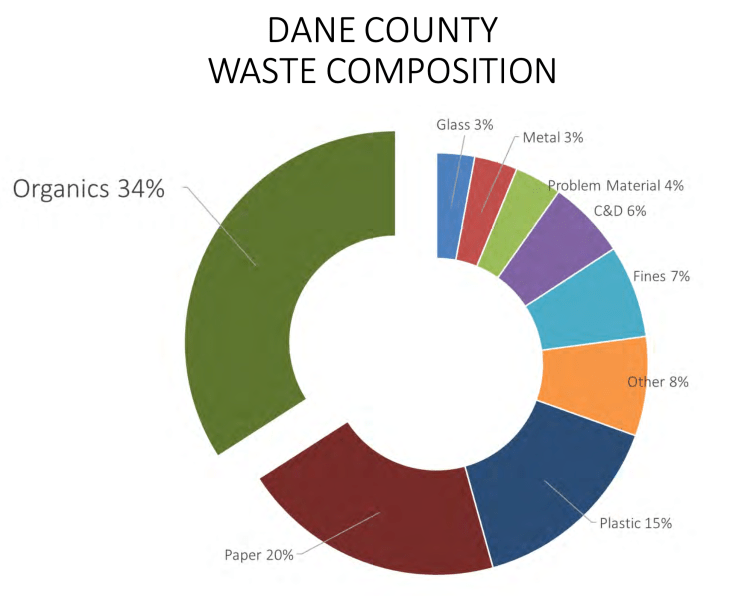
  3. Financial and logistical support for composting food waste that is generated by
    grocery stores who donate food, but ultimately paid for by non-profit pantries
Data from 2020 WDNR Waste Sort

Participating were Community Action Coalition, Second Harvest Food Bank, The
River, Badger Prairie Needs Network, Way Forward, St. Vinnie’s, Neighborhood House Community Center, Sustain Dane, Little John’s, Healthy Food for All, Northside Planning Council, as well as representation from the City, County and University of Wisconsin.